East Orange, New Jersey
The Short and Tragic Life of Robert PeaceEast Orange, New Jersey, is more than the place where Rob Peace grows up: it is the social and economic environment that makes his divided life intelligible. Situated beside Orange and near wealthier South Orange, it becomes a landscape of racial change, industrial decline, concentrated poverty, drug commerce, family obligation, and enduring neighborhood loyalty. Rob’s later movement through St. Benedict’s, Yale, Rio, teaching, airport labor, and real estate never erases East Orange; each new setting remains measured against it.
Racial and Economic Transformation
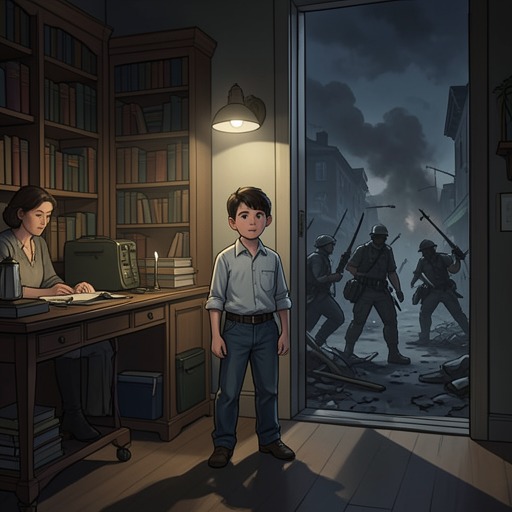
East Orange changes dramatically across Jackie Peace’s lifetime. When her family moved from Elizabeth in 1960, the city was 39 percent black and 53 percent white. By 1980, the year Rob was born, it was 89 percent black and only 4 percent white, and residents colloquially called the area “Illtown.” Jackie observed the transformation block by block, as neighborhoods such as Vailsburg, Irvington, and East Orange became increasingly black. She also witnessed the consequences of white flight after the 1967 Newark riots: houses appeared for sale three or four to a block, while the 1973 completion of Interstate 280 created a rapid route beneath the Oranges, allowing commuters to cross impoverished urban areas on the way to suburban enclaves.
The racial transition was intensified by a predatory real-estate market. Jackie’s father condemned realtors who used civic unrest to persuade white homeowners that the arrival of one black family would bring more black families and destroy property values. The Peace home stood just beyond the boundary between Orange and the traditionally more dangerous East Orange, while Tuxedo Park and the Seton Hall campus helped preserve Orange’s reputation as a more diverse and desirable municipality. Those municipal lines could not prevent the deterioration that gradually overtook Chapman Street, South Essex Avenue, and Lincoln Avenue. Stores and houses changed, properties were abandoned and boarded up, and gunfire began to interrupt ordinary domestic life.
Industrial decline supplied the economic foundation for this deterioration. Between 1970 and 1980, more than six hundred factories in and around Newark closed as manufacturers moved toward cheaper land, foreign goods displaced American production, and companies outsourced labor. Tanneries, glass works, plastics plants, and industrial-machine-parts factories disappeared one by one, bringing mass layoffs. With public housing already full and unemployment rising, violence and the drug economy spread outward from Newark’s housing projects into the North and West Wards, then into East Orange. The city’s informal nickname, “Brick City,” carried competing meanings: the hardness of its people, the brick streets downtown, and the easy availability of brick-shaped packages of crack cocaine.
Poverty, Violence, and Everyday Life
During Rob’s early childhood, East Orange had the second-highest concentration of African Americans living below the poverty line in the United States, behind East St. Louis. Its violent-crime rate reached 3,500 incidents per 100,000 people, almost six times the national rate of 600 and eight times the rate in adjacent South Orange, where the figure was 400. The comparison made the geography of risk unusually stark: a person in East Orange faced roughly a one-in-thirty chance of being violently robbed, assaulted, raped, or killed in a given year, while a comparable person half a mile away in South Orange faced less than a one-in-two-hundred chance.
Despite that danger, the city is also the setting of family shelter and ordinary attachment. Horace Peace kept his job, and the Peace house remained open to relatives who needed somewhere to live. Jackie’s daily life was rooted largely in East Orange, where her friends lived, where she worked and shopped, and where Robert “Skeet” Douglas conducted his business. Rob’s physical and emotional life was similarly based there even when his education carried him elsewhere. East Orange is therefore not depicted only as a zone of deprivation; it is also the place where kinship, familiarity, and mutual obligation persist amid structural abandonment.
Orange Park shows how those contradictions coexist. On warm weekends, Jackie took Rob there with a blanket, canned pears, and ham, trying to create a few restful hours between night shifts and the backaches of a six-day workweek. By the 1980s, as crack spread through the neighborhood, dealers had effectively taken over the park. Men, women, and boys sat around picnic tables with malt liquor in brown bags, their conversations appearing cheerful until customers approached and transactions acquired a different gravity. Day-Day, the operation’s watchful executive, paced the park’s diagonal paths and knew Skeet; he would stop at Jackie and Rob’s blanket to remark that the child looked increasingly like his father. On Sundays, he moved the sellers to the south side and left the playground side to parents and children.
The playground itself made the city’s social conditions visible in physical form. Its equipment was splintered and loosely held together by rusty nails, while fragments of crack pipes and vials lay embedded in the dirt beneath the swings. After dark, the park could be safer for drug use than private homes or apartments, not because the environment was secure in any ordinary sense, but because police patrols were scarce while officers responded to domestic-abuse and other emergency calls. The city’s danger is thus both public and institutional: violence is present, yet ordinary municipal protection is too overwhelmed to address it consistently.
East Orange and Rob’s Social Imagination
East Orange supplies the code through which Rob interprets disrespect, class difference, and danger. At Yale, when affluent crew-team students left dirty trays behind in the dining hall where Rob worked, the immediate offense was minor by campus standards. Yet their refusal to bus the trays, failure to make eye contact, smirks, expensive clothes, wasted food, and disregard for dining-hall workers accumulated into something much larger. Rob imagined the kind of physical retaliation that friends from his neighborhood might have considered an intelligible response, then punched a hole through the dish-room wall instead. His anger reflected the collision between Yale’s insulated safety and the moral expectations of East Orange, where social insults could carry a more consequential charge.
The same tension shapes his response to his father’s conviction. In his Elihu biography, Rob portrayed the prosecution of Skeet Douglas as an example of a white establishment preserving its own authority at the expense of a black man. He argued that the gun used to kill Charlene Moore and Estella Moore had been stolen from Skeet’s apartment, used in the neighboring murder, and returned before police removed it and planted it on him. Whether or not the defense could resolve every factual gap, Rob’s account made East Orange’s history of racial power central to his understanding of justice. Arthur Turpin, an affluent Yale student, recognized that Rob’s defense of his father was not merely an intellectual position but an emotionally dangerous inheritance rooted in the world Rob had left without escaping.
East Orange also remains the place to which Rob returns whenever institutional success fails to provide stability. His academic record was extraordinary: a combined SAT score of 1510 out of 1600 placed him in the ninety-ninth percentile nationally, and his Yale degree and scientific training appeared to promise mobility. Yet when he finished Yale, he came back to his mother’s house on Chapman Street, eating her food and watching her leave for work while he had no job, no schoolwork, and suddenly no money. The return made him feel like relatives who had attempted independence, failed, and been forced home.
His later work choices sharpen the contradiction. After a dangerous encounter with a marijuana supplier in Newark, Rob began teaching at St. Benedict’s and temporarily left drug dealing. But he eventually took a baggage job with Continental Airlines, arguing with Jackie that teaching paid too little and that airport labor exchanged mental strain for physical strain while providing wages, benefits, and freedom of mind. Jackie saw a Yale-trained scientist and teacher working at the airport’s lowest level; Rob saw a practical route toward supporting himself and pursuing real estate. When the housing bubble burst in 2007 and the collapse of subprime lending blocked his financing, Peace Realty remained limited to one property at 122 Greenwood Avenue. The failed plan left him again facing the gap between his qualifications and the opportunities actually available to him.
A Continuing Point of Return
East Orange functions as both origin and measure. Rob’s friends and relatives repeatedly ask what he is doing with his life, often against the backdrop of the city’s familiar streets and institutions. At the Gaslight Brewery in South Orange, Nathan asked him the question directly. Rob answered that he had gone to Yale and knew what he was doing, but Nathan reminded him that Yale had been ten years earlier and pressed him to account for the present. The exchange exposes the unresolved relationship between educational escape and local return: Yale remains an achievement, but East Orange remains the place where achievement must be converted into work, care, money, and a credible future.
The city’s significance lies in this unresolved pressure. It gives Rob a language of loyalty and self-reliance, a sharp sensitivity to class contempt, and a powerful obligation to his mother and family. It also surrounds him with poverty, violence, illegal markets, and limited legitimate opportunities. East Orange does not mechanically determine his choices, but it makes their contradictions legible: education offers an exit without guaranteeing arrival, legal work offers dignity without sufficient reward, and neighborhood belonging offers protection while keeping danger close. Rob can leave East Orange physically, yet the city remains the persistent social world against which he understands himself and from which his most consequential decisions continue to emerge.